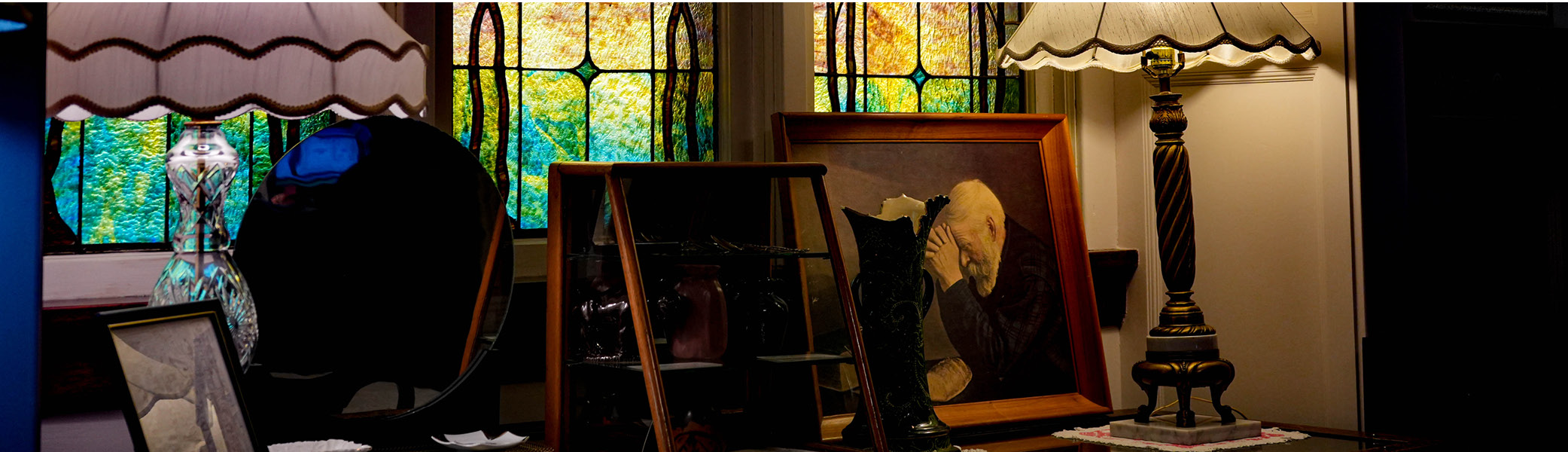
Explore Our Collection of Pioneer-Era Artifacts
At the Stutsman County Memorial Museum, history comes to life through an extensive and carefully curated collection of pioneer-era artifacts and memorabilia. Located inside the historic Lutz Mansion, our exhibits tell the story of early life in Jamestown, North Dakota, and the surrounding region.
Our four-floor collection showcases the everyday tools, treasured keepsakes, and functional items used by settlers who built this community from the ground up. With original pieces spanning the railroad, agricultural, military, medical, and domestic spheres, each artifact offers a glimpse into the challenges and triumphs of prairie life.
We also house rare photographs, documents, clothing, and archaeological finds, giving visitors a broad look at the people and cultures that helped shape Stutsman County.
Whether you’re a lifelong resident, a first-time visitor, or a student of history, we invite you to explore, learn, and connect with the stories that define our region.
Scroll below to explore highlights from our collection.
BALLROOM
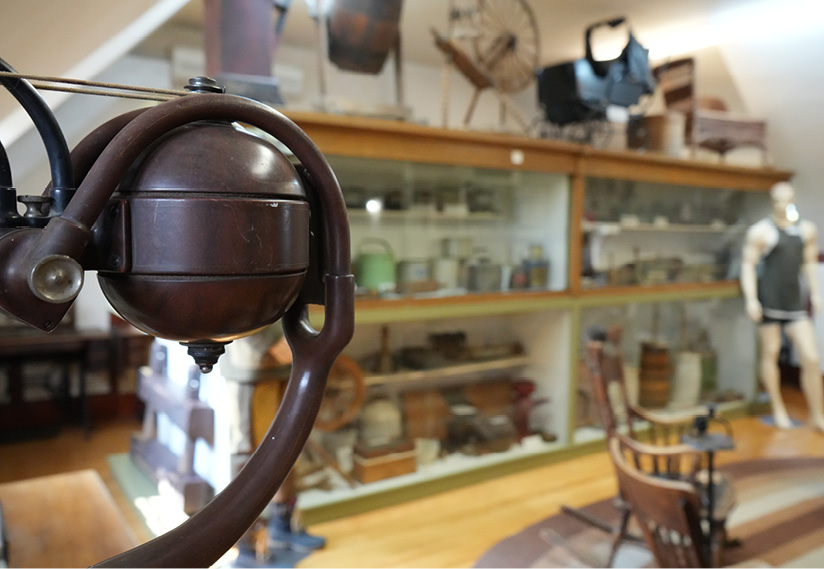
The Ballroom is located on the Third Floor. It was used for grand parties and dances by the Lutz Family. It houses a large collection of memorabilia that is either too large for other rooms or do not fit with any particular theme.
BARBER/BEAUTY SHOP
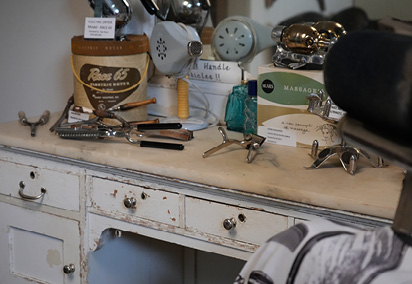
The Barber Shop/Beauty Shop houses much of our sports memorabilia in addition to Barber and Beauty equipment of years passed!
CARRIAGE HOUSE
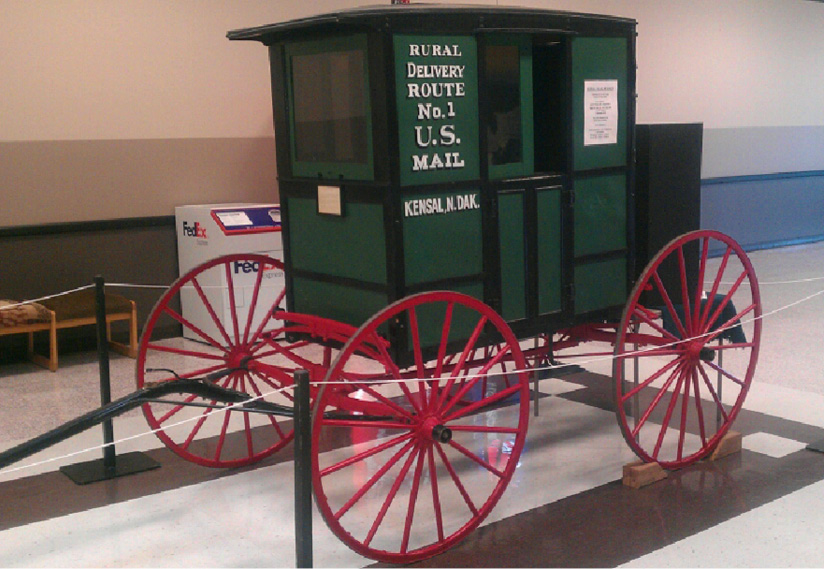
The Carriage House set behind the museum (East). It houses the mail wagon and is used for storage of other artifacts that are not currently displayed. The horse drawn mail wagon pictured was used at Kensal, ND. It has a built in coal stove, but no insulation
CLAIM SHACK
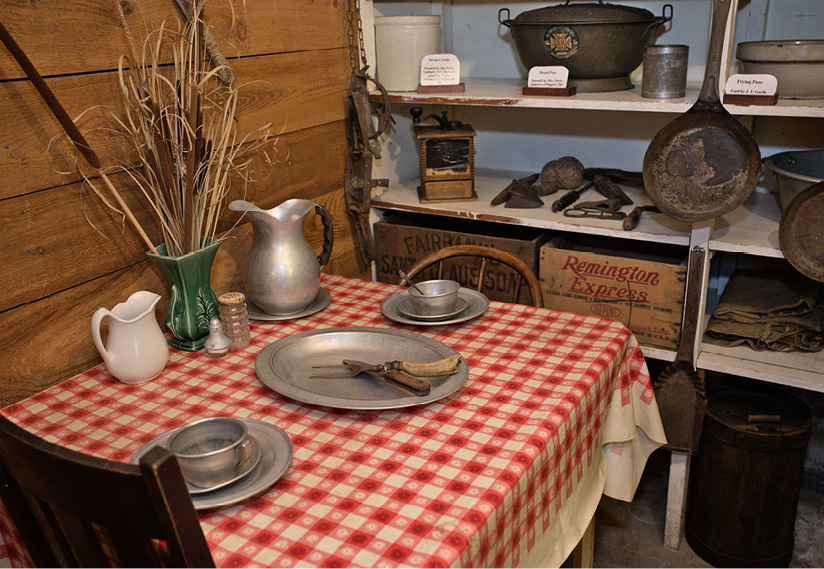
The Claim Shack depicts the austere life style of the homesteader. It is constructed of rough hewn lumber and is furnished with a combination heating and cooking stove, a bed, a chair a steamer trunk and some shelves. This was probably as much as most homesteaders had in their first years on the prairie. It is the first room below the stairs from the back porch.
COUNTRY STORE
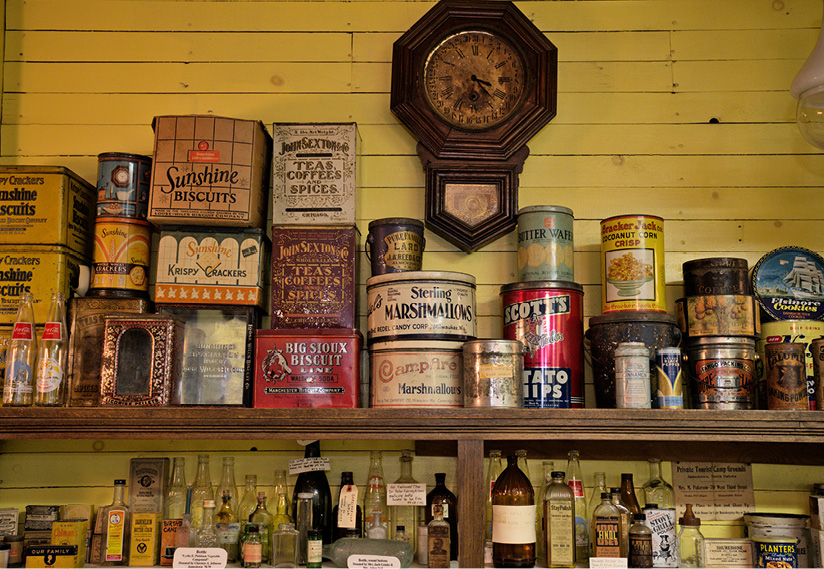
The Country Store is a replica of the “department store” of the prairies. They had a bit of everything that the homesteader or rancher needed for survival. Their goods were serviceable and simple; far from the fancy fare that was available in the specialty shops “back east”. Our Country Store is located in the main basement area and also houses Jamestown’s first post office counter and mail boxes.
DINING ROOM
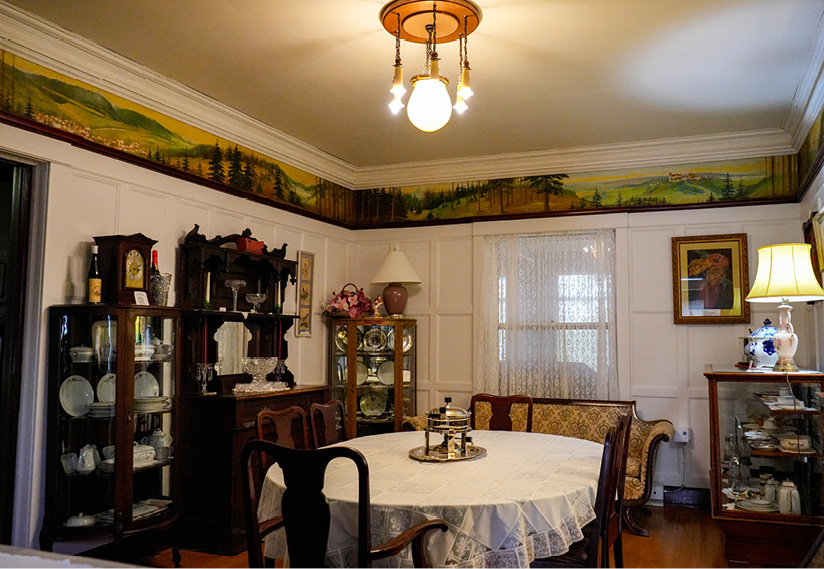
The Dining Room displays much of the fine china in our collection in several elegant hutches and china cabinets. The room is dominated by a very large oval table probably very similar to the one used by the Lutz family when they resided here in the early 1900’s.
DOLL ROOM
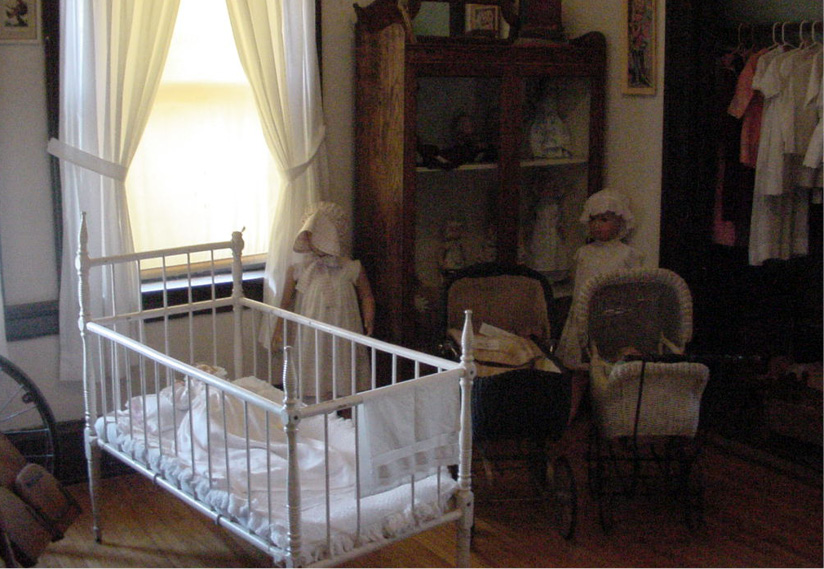
The Doll room is on the third floor to the right of the stairs. It is the only bedroom in the house that is without any embellishment, no fancy molding, no fancy plaster treatments. We believe it was the servants’ quarters. It would have been the hottest room in the summer, the coldest room in the winter and may have been shared by more than one servant.
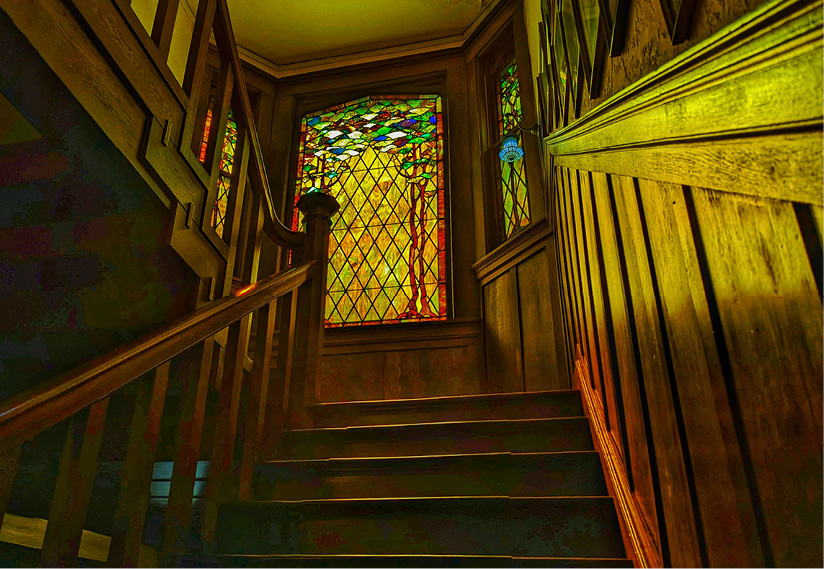
FOYER
The foyer includes the grand stairway to the second floor with the very large stained glass window on the landing. There is also a small alcove beneath the stairs that may have been used as a sitting area for workmen or trades people that had business with the family. Invited guests would have been seated in the Sitting Room (Music Room) or Parlor for quiet conversation.
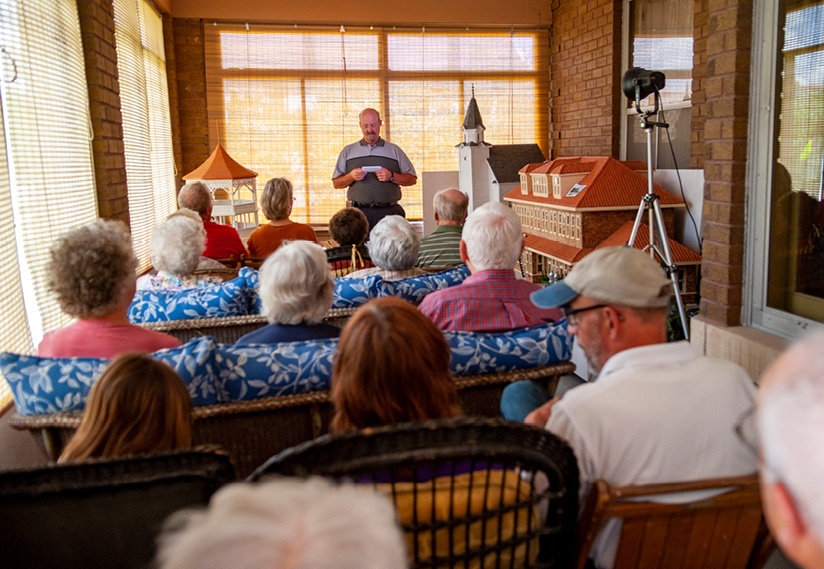
FRONT PORCH
The Front Porch was an open verranda during the time the Lutz family lived here. When it became a home for the aged it was enclosed and used as extra space in the spring, summer and fall. It was likely very cold during the winter due to the large window area and lack of insulation. It currently houses our collection of model buildings; including the Otter Tail Power Plant, Northern Pacific Depot and Railway Park Gazebo all constructed by Miles Jensvold; the Church constructed by Simmon Graves and the model of the Jamestown Hospital created to show the latest remodel plan.
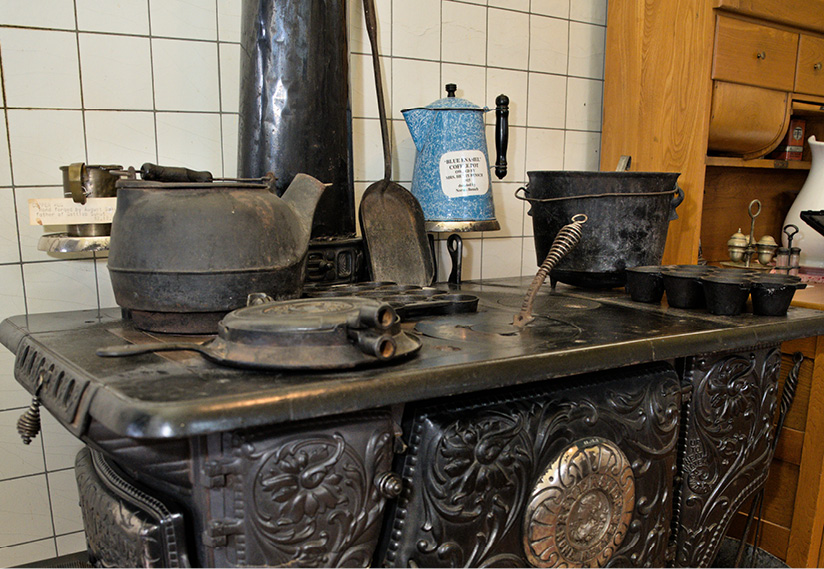
KITCHEN
The Kitchen houses a coal burning kitchen range and a stand alone cupboard. The laminate counter on the north wall was surely added during the time it was used as a home for the aged, as were the linoleum wall coverings. They were probably added at the insistance of health inspectors. It is the only room in the house with tile floors (in a checkerboard pattern) typical of the style of the forties and fifties. Although there are food preparation items spread throughout the museum, some of the more unique items are displayed here.
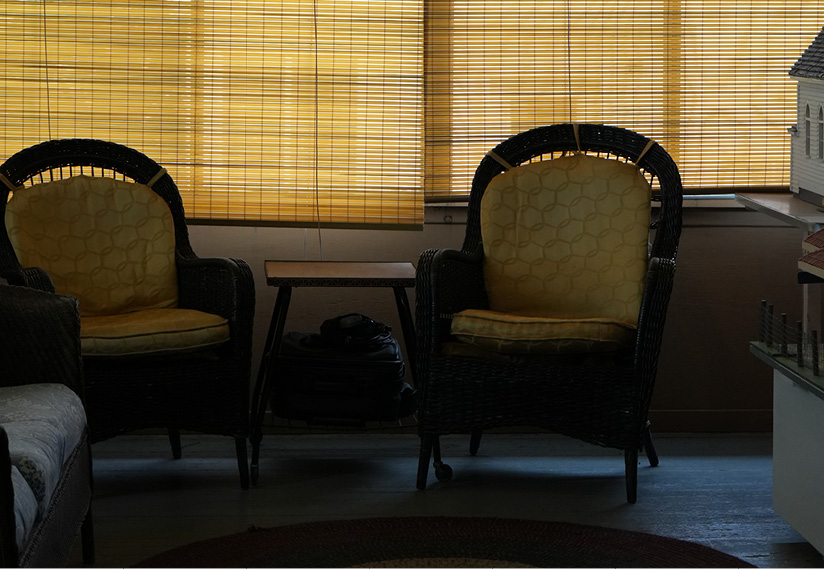
LIBRARY
The Library is locate in the Southeast corner of the second floor. It was very likey used as a bedroom by Alma, the Lutz daughter. It is a large room with a bay window and lots of light. It is currently used to house our large collection of scrapbooks that have been donated by county residents. There is also a large collection of photographs, County Auditor records and other paper memorabilia. This room also displays the fireplace from the old St. James Rectory.
MEDICAL ROOM
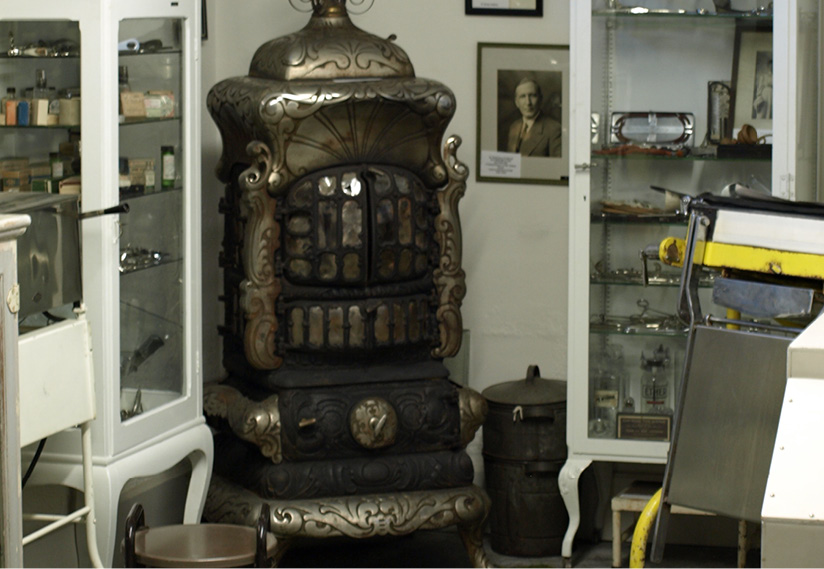
The Medical Room is located in the basement (first room on the right). It is home to several cabinets of old medical equipment, several examining or treatment tables. One of our prized pieces is displayed here, the first incubator used at Jamestown Hospital, it is a marvel of design simplicity and functionality. There are also many pictures of early doctors in Jamestown and Stutsman County.
MILITARY ROOM
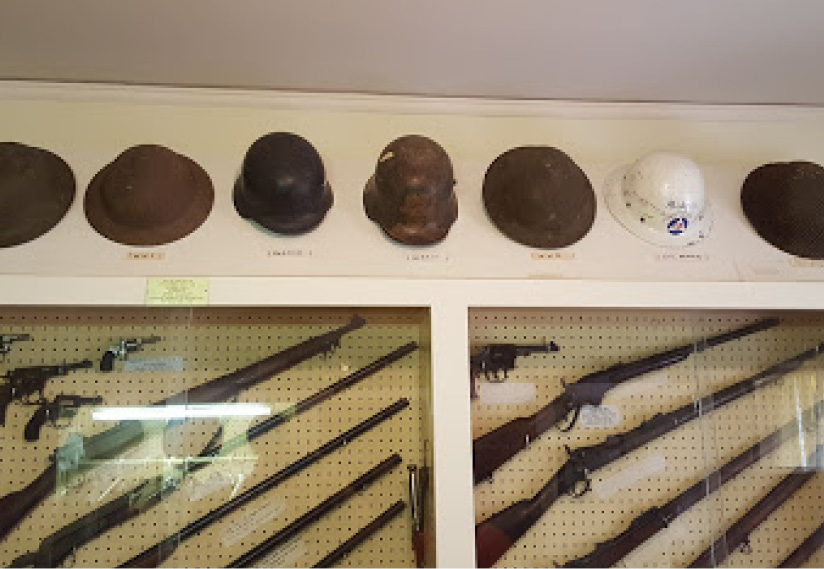
This room houses our collection of weaponry, although not all are military, all are old and collectable. The room also displays many military uniforms, helmets and other military memoribilia. The premier element in this room is a very large (9 ft by 12 ft) Japanese flag, our provenance for this flag states that it was given to General Douglas McArthur on the battleship Missouri. McArthur then gave it to his Aide, Colonel Ted Beeman, who was from Jamestown. Beeman then gave it to Bud Murphy for the museum. We can’t prove it to be fact but the circumstantial evidence points to the authenticity of the story.
MUSIC ROOM
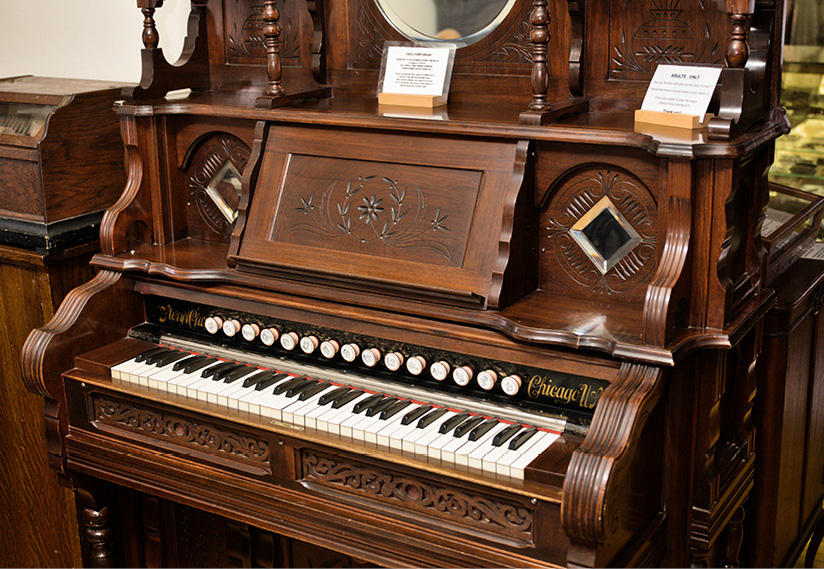
The Music Room is located just off the foyer, it was probably used as a Sitting Room by the Lutz family for quiet conversation with guests prior to a meal or other activity. It currently houses much of our musical collection including square grand and upright pianos and several pump organs. A ukelin, dulcimer and harpsicord are also displayed here. The room is also home to an Edison cylinder phonograph and a hand wound 78 rpm disk phonograph.
PANTRY
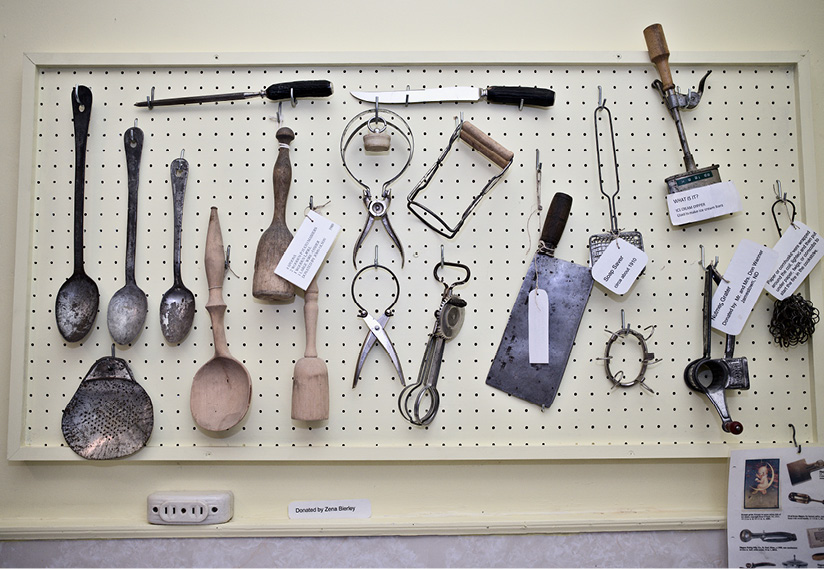
The Pantry houses a 1950’s era refrigerator and our collection of cook books in addition to many of the types of pots and pans that were used by our ancestors. It is located just off the Kitchen to the east.
PARLOR
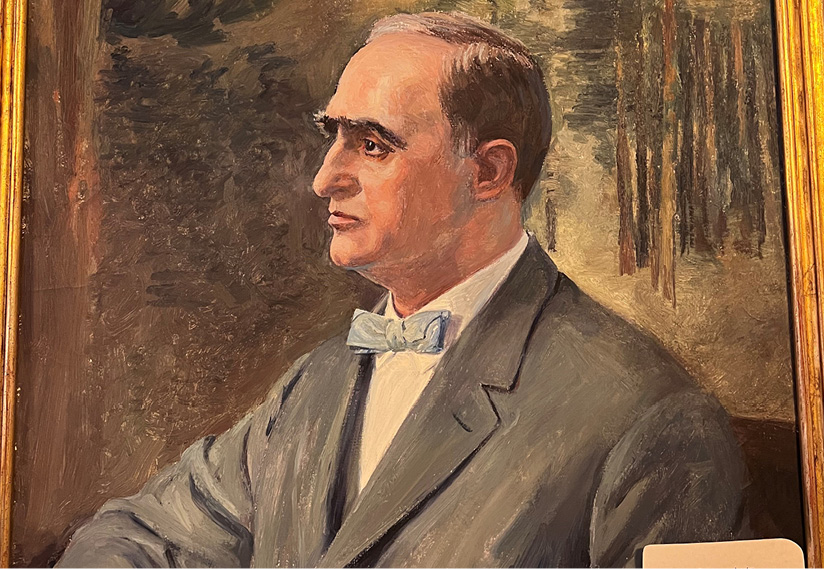
This room is to the right of the foyer and houses a great deal of memorabila. The collection here ranges from hair combs to cigar lighters and from eye glasses to antique dresses and hats. The plaster treatments in this room are unique, it houses the grand fireplace with a painting of George Lutz on the mantle. Mr. Lutz was a prominent Jamestown and Stutsman County lumber dealer, he built the mansion and lived here from 1907 until his death in 1929.
PEGGY LEE ROOM
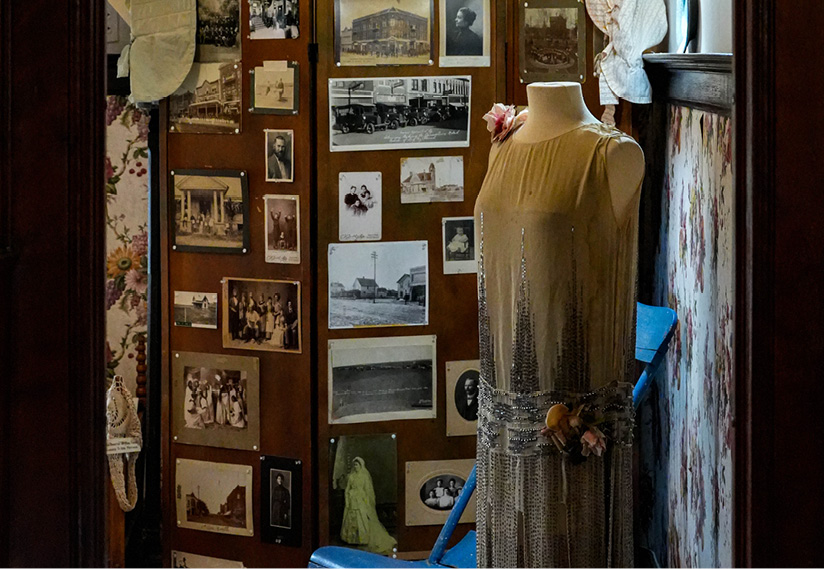
This room was very likely the room of the Paul, the Lutz son. It is located on second floor to the left at the top of the stairs. This room is used to display our collection of Peggy Lee memorabilia, dominated by a dress that she wore and is shown in a photo that accompanies it. This room is furnished as a bedroom, and is the only room that is painted in a color (hot pink) that was definately not original to the house.
RAILROAD ROOM
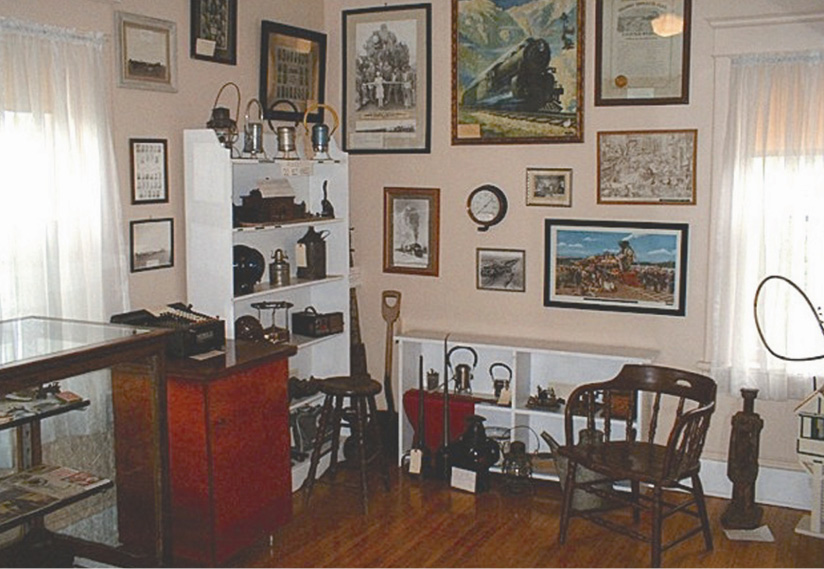
This room is located in the northeast corner of the second floor, it houses our collection of railroad memorabilia. Much of the Bud Koon collection of steam engine photos and other memoribilia are housed here as are many items from former conductors and other railroad workers.
RHODES ROOM
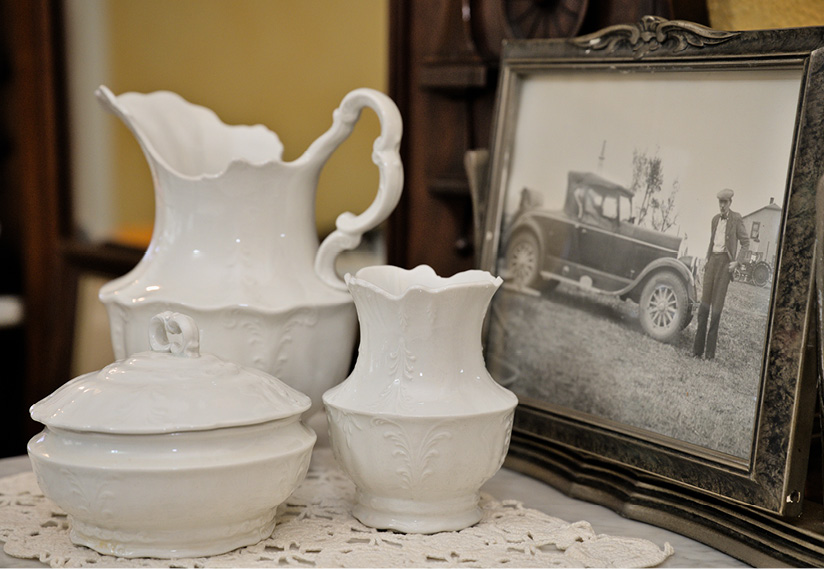
The Rhodes Room is called that because of the very imposing baroque furnishings that were once the property of the estate of E.P. Rhodes, a local jewler. They are the only items to our knowledge that were purchased for the museum. This room was undoubtedly the master bedroom of the Lutz. It has its own fire place and an adjoining bathroom, which displays a most unique “stand up” bath tub.
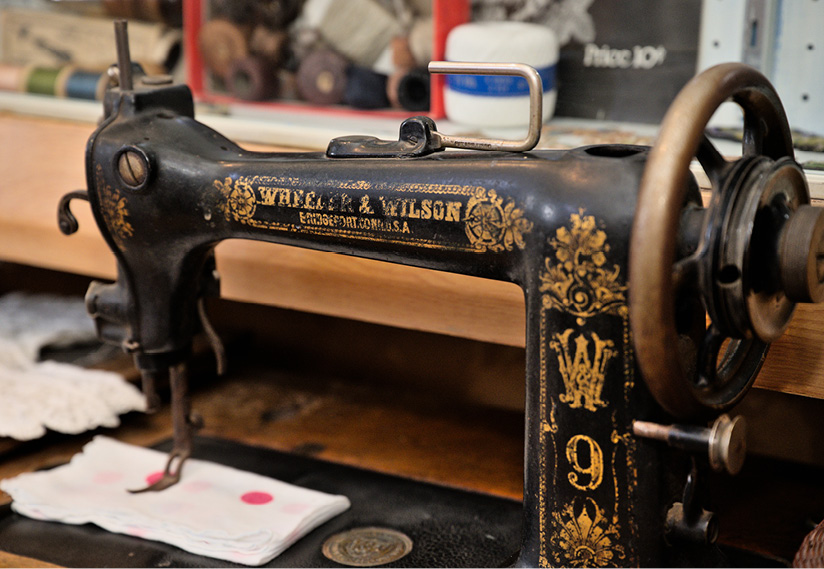
SEWING ROOM
The Sewing Room has a collection of treadle sewing machines, buttons and other notions. It was probably used to store table cloths, napkins, silverware and other banquet necessities.
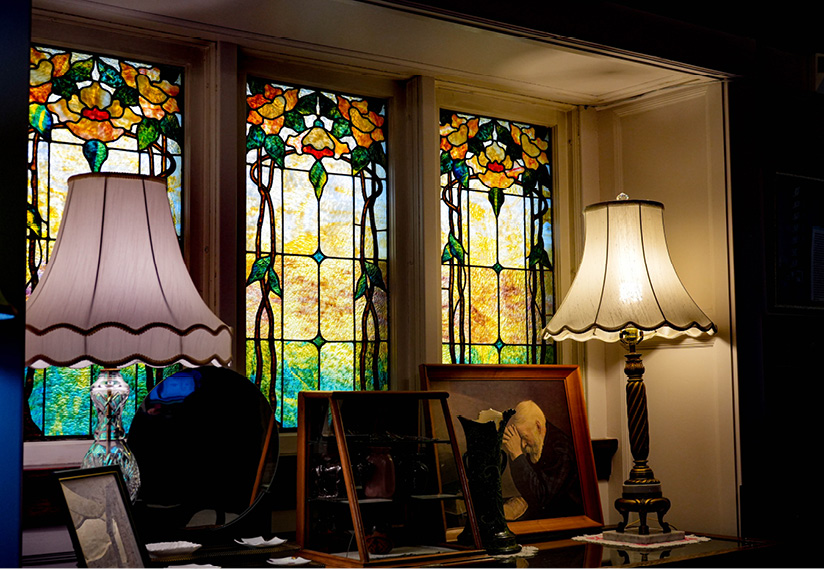
VESTRY
The Vestry Room is on the second floor behind the spiral staircase. It houses several of the ornately embroidered vestments worn by priests at St. James Basillica. There is also a collection of old German, Norwegian and English Bibles. Several lecterns and other furniture pieces are also displayed here.